 Design Duniya
News / Apple
A startup says it owns the phone-to-phone tap
A US startup has sued Apple in the Bombay High Court, saying NameDrop, the iPhone’s tap-to-share contacts feature, infringes its Indian patent. It wants the feature off iPhones sold in India.
By DD Desk
20 Nov 2026 · 3 min read
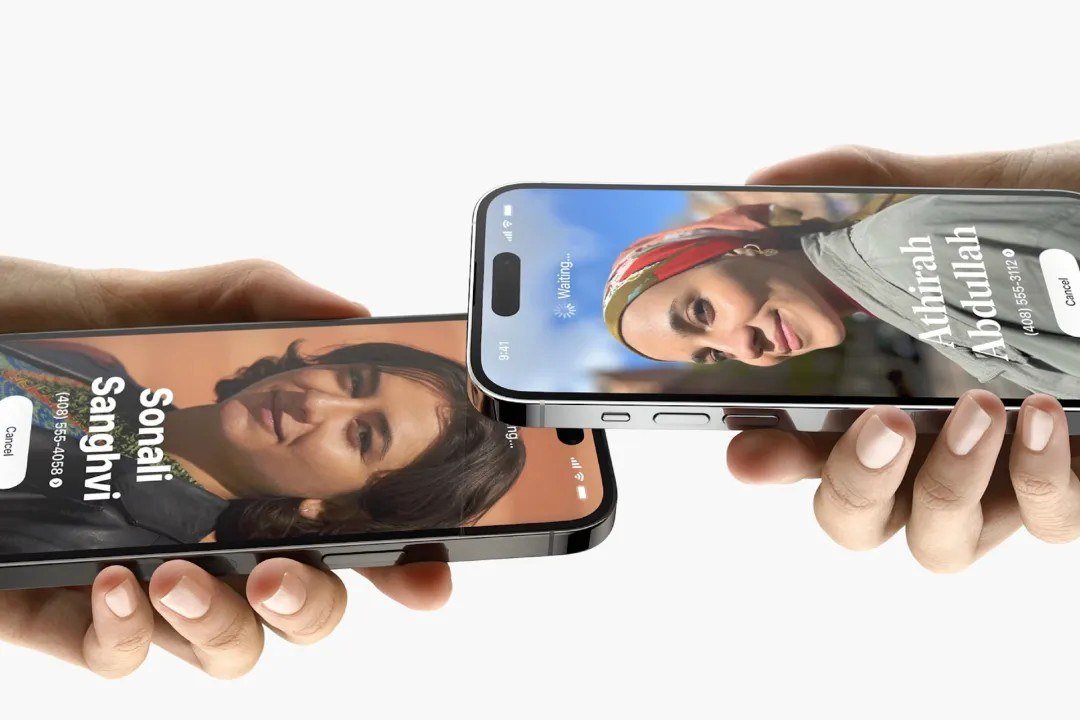
GG Technologies, a company in Santa Monica, California, that makes a contact-sharing app called StayTouch, has sued Apple in the Bombay High Court, TechCrunch reported on 20 November. It is asking for ₹15 billion (about $162 million) in damages and an injunction.
The 781-page filing says NameDrop infringes an Indian patent on swapping contact details with a nearby device without pairing first. The patent was granted in July 2024. GG Technologies wants Apple barred from selling or importing iPhones and Apple Watches that come with the feature.
What NameDrop does
Hold the top of your iPhone near someone else’s and both screens show a contact card with a name, number and poster photo. Each person chooses whether to share their card or only receive. Apple added it in iOS 17 in 2023, and to the Apple Watch later that year. It replaced the old routine of reading a number out loud and typing it in.
Why designers should watch
Most design disputes are about how something looks. This one is about a gesture. If an interaction like “bring two phones together” can be patented and enforced in India, teams building tap-to-share or tap-to-pay flows may need to check patents as well as pattern libraries.
The case has some way to go. Pre-suit mediation started in April and failed in September, and the suit was filed in October. It has not yet been listed for a hearing. A related complaint led the US International Trade Commission to open an investigation in August. Apple did not respond to TechCrunch’s request for comment.
What changed
GG Technologies, maker of the StayTouch app, has sued Apple in the Bombay High Court over NameDrop, seeking ₹15 billion and a ban on iPhones and Apple Watches sold in India with the feature.
Why it works
- NameDrop turns swapping numbers into one physical gesture.
- Each person decides to share or just receive, on the spot.
- The case asks whether a gesture, not a screen, can be owned.
Source
Reported by TechCrunch, from court documents it reviewed. Image: Apple, via TechCrunch.