 Design Duniya
News / Apple Maps
Apple Maps learns to give directions the Indian way
Apple’s redesigned Maps has finally reached India. The interesting part is not the 3D buildings but the directions: they now point to things you can see from the road, and label places in two scripts at once.
By DD Desk
19 Nov 2026 · 3 min read
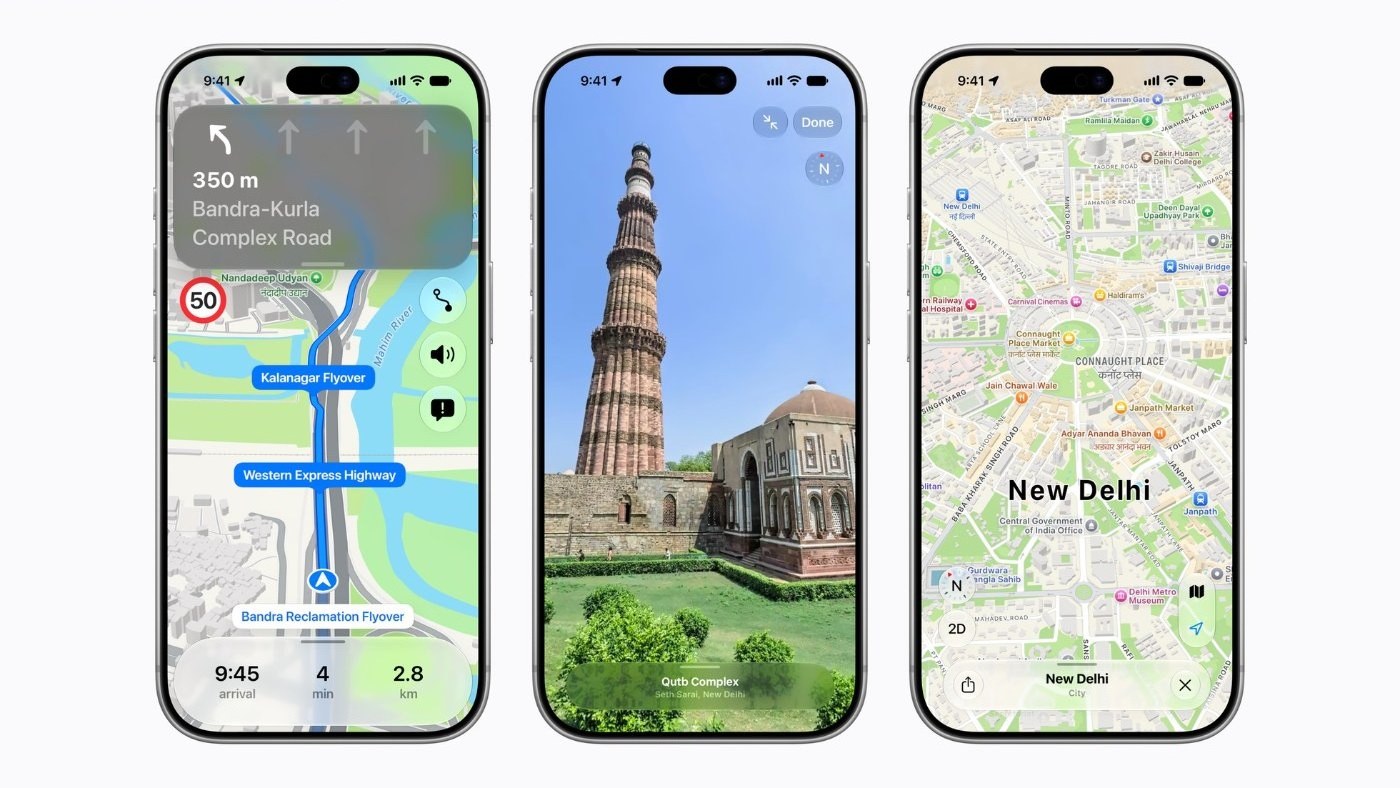
Ask for directions in India and you rarely hear a street name. You hear the temple, the chai stall, the second petrol pump. Roads often have names that nobody uses, or no sign at all. Apple’s redesigned Maps, which rolled out across India on 18 November, builds that habit into its voice guidance.
Directions you can see
Natural Language Guidance swaps distances and street names for landmarks. Apple’s own example is “At the next traffic light, turn left”. In India it leans on local reference points such as petrol pumps and pillars, which helps most on roads with no name at all. It is a design choice that starts from how people already talk, not from the map’s database.
Two scripts on one label
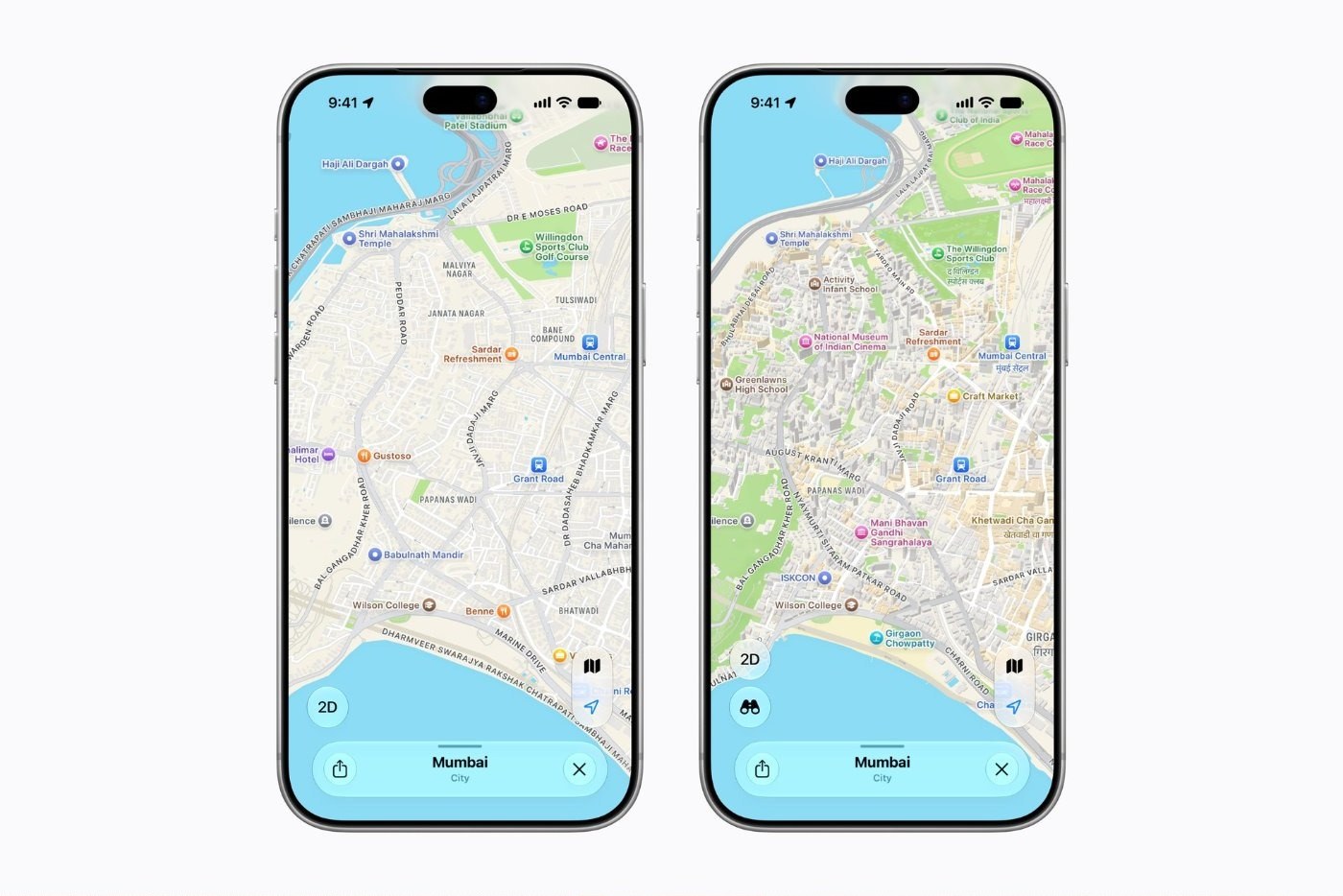
Place names now show in English and the local language together, the way Indian road signs do. The label on the screen matches the board outside the window, whichever script you read faster. Maps also adds ten more Indian languages beyond English and Hindi, from Bengali and Tamil to Odia and Urdu.
The rest of the redesign
The update brings Look Around street imagery, more than 300 3D landmarks, AR walking directions, lane guidance and routes with up to 15 stops. Transit covers Ahmedabad, Bengaluru, Chennai, Delhi, Hyderabad, Kolkata, Mumbai and Pune, plus Indian Railways, with an alert when it is time to get off.
India was one of the last big markets to get this redesign, which reached the US in 2018, even though Apple has run a Maps development centre in Hyderabad since 2016. The landmark directions and dual-language labels need iOS 27.2 or later.
What changed
Apple Maps in India now gives landmark-based voice directions, shows place names in English and the local script, and adds Look Around, 3D landmarks and transit in eight cities.
Why it works
- It gives directions the way Indians already give them, by landmark.
- Dual-language labels match the road signs people actually see.
- It works on roads that have no name or no sign.
Source
Announced in the Apple Newsroom (images) and reported by MacRumors.